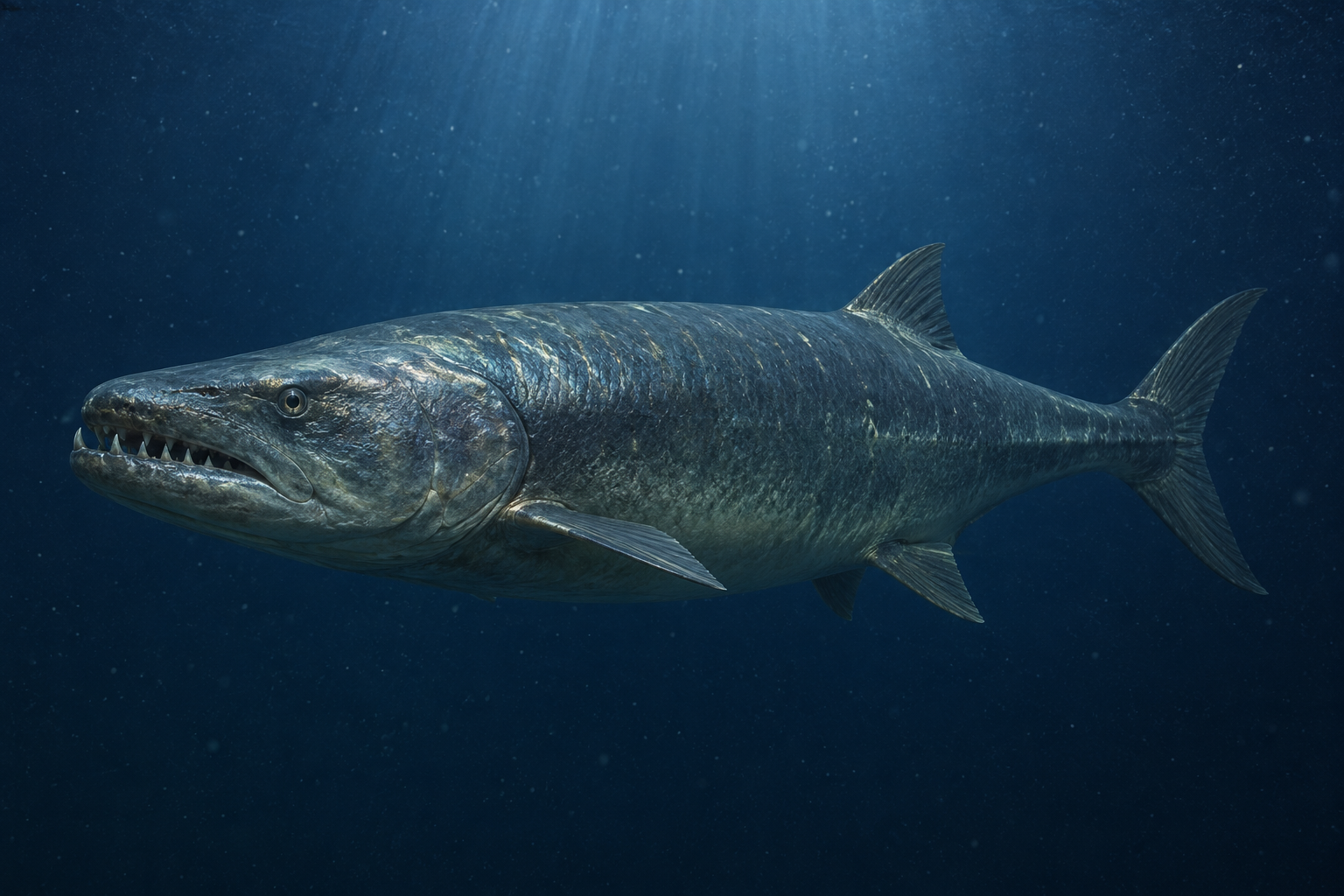
 FIELD RECORD 01
Biological archive / Public release
Field records.
Sixteen dossiers drawn from the fossil record and the world of Below the Thermocline. Every entry marks where established science ends and story inference begins.
Established Probable inference Speculative / in-universe
FIELD RECORD 01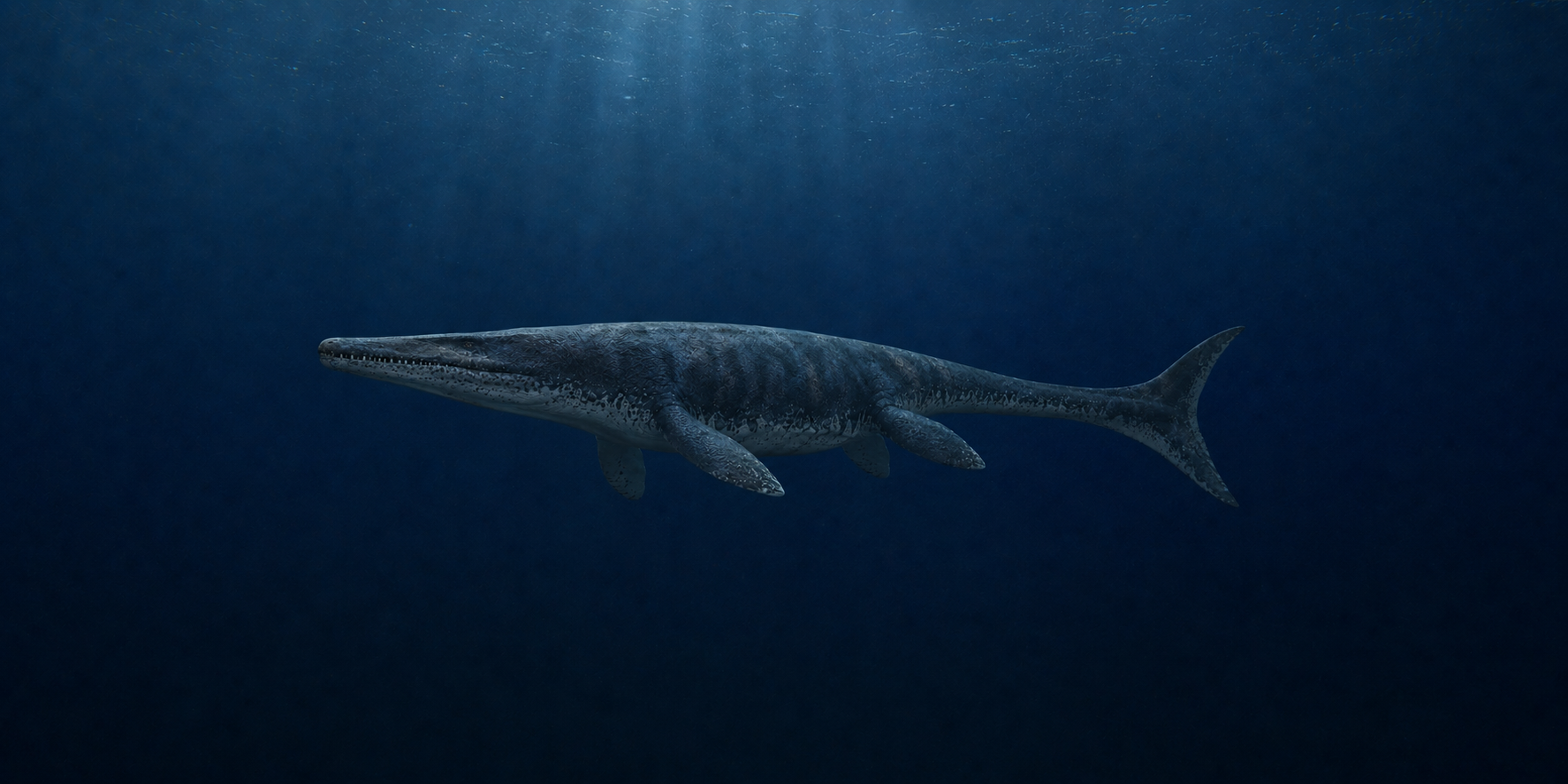 FIELD RECORD 02
Tylosaurus proriger
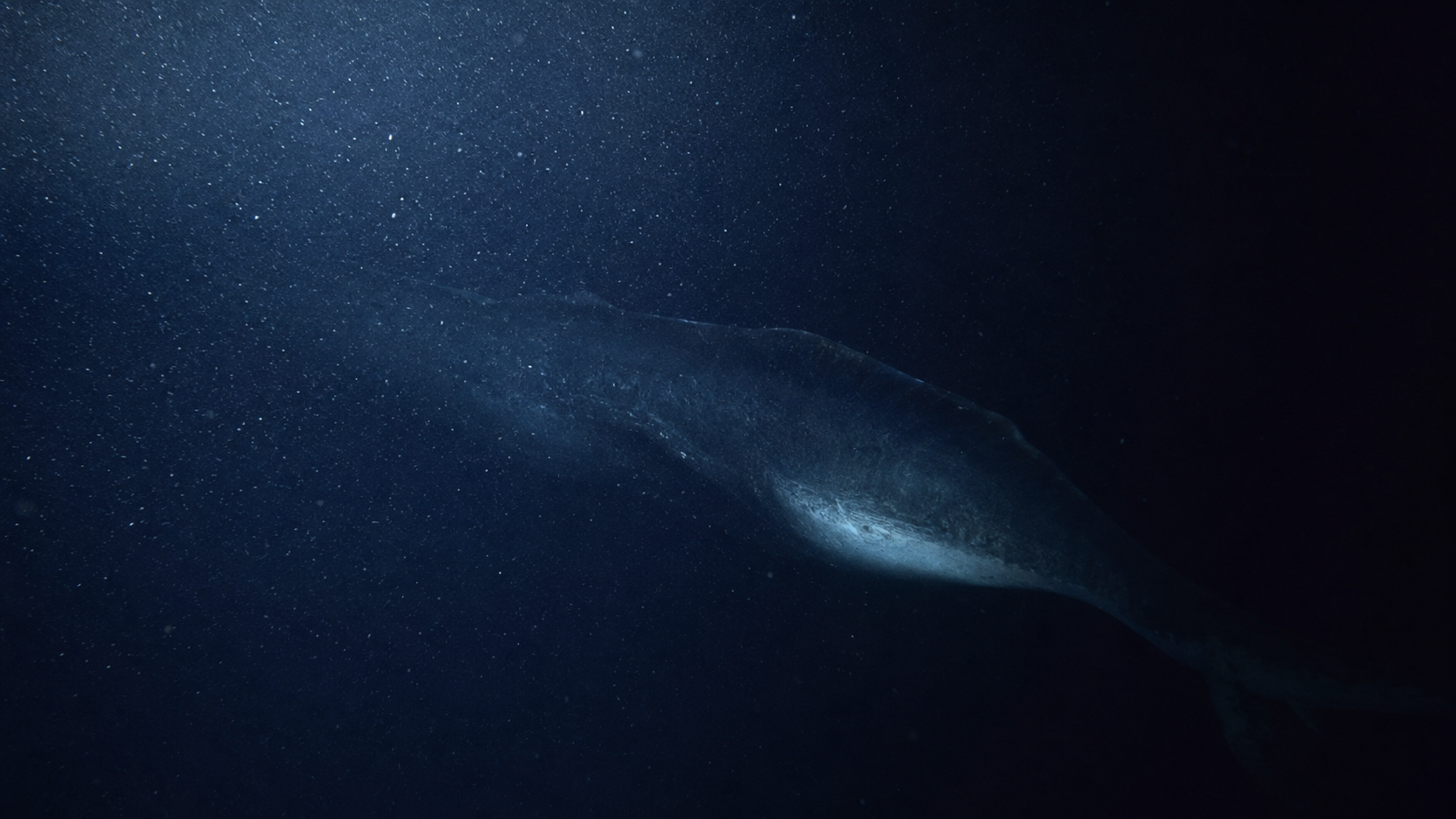 FIELD RECORD 03
Contact Alpha
Visual specimens
Recovered imagery.
Reconstructions favor documented anatomy over monster-movie exaggeration. Environmental presentation remains classified.
Marine reptiles
07 records01Late Cretaceous · 70–66 Ma
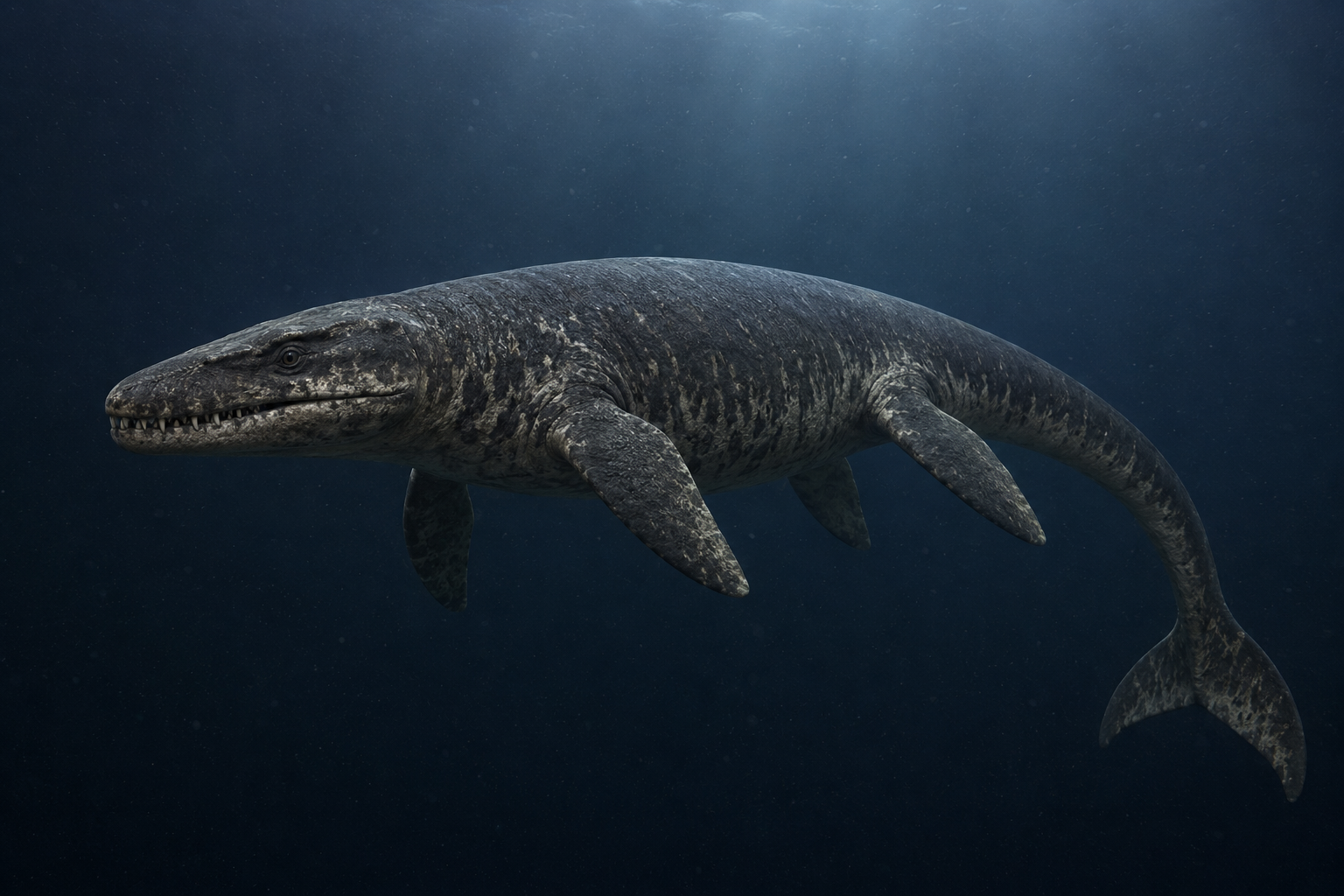
Mosasaurus hoffmannii
The surface hunterProbable+
Late Cretaceous · 70–66 Ma
Mosasaurus hoffmannii
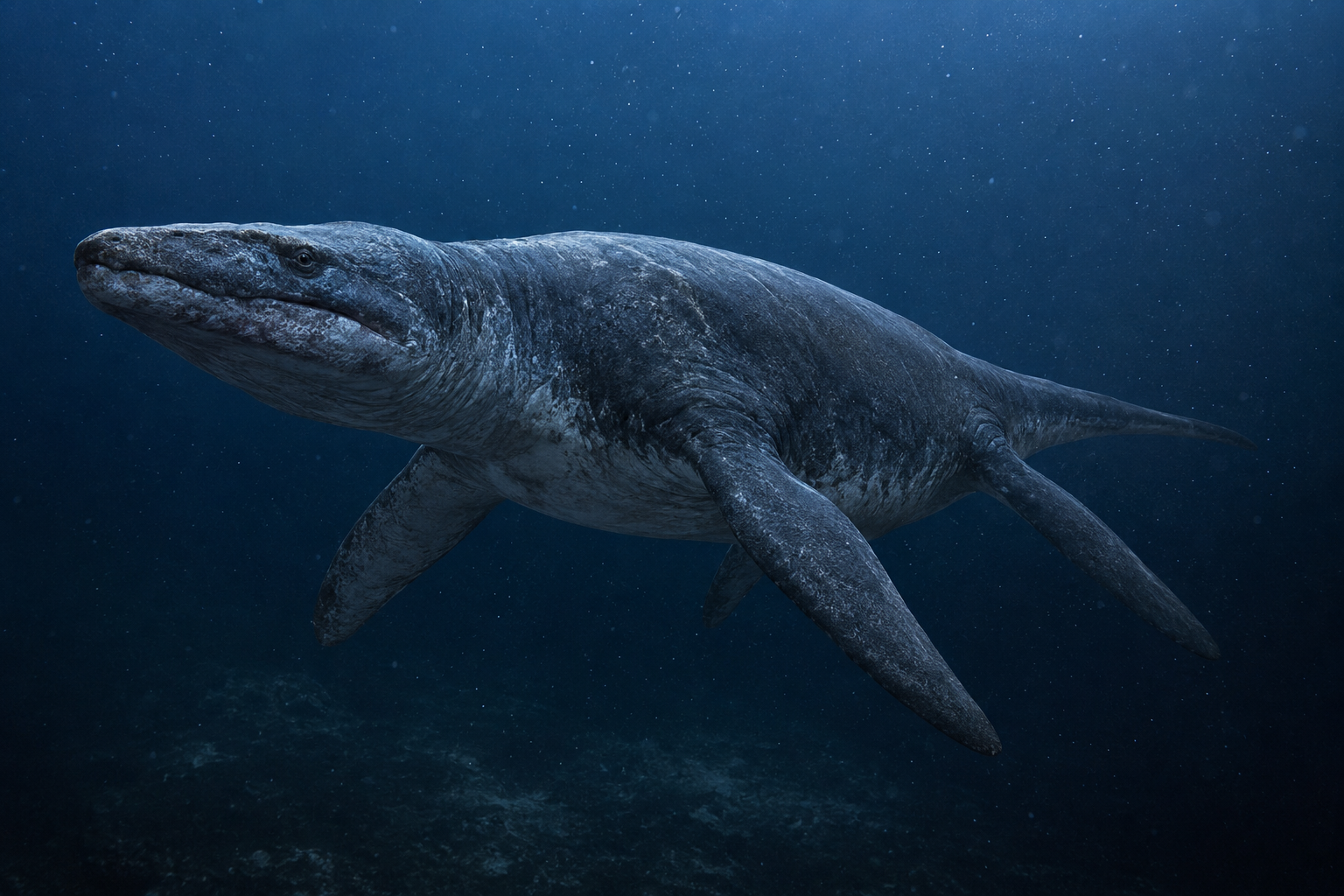
The surface hunterA giant ocean-going lizard with powerful jaws, paddle-shaped limbs and a deep, two-lobed tail. Mosasaurs had flexible skulls, but did not simply dislocate their jaws like movie snakes.
- Scale
- Large individuals roughly 12–17 m
- Fossil range
- Europe, North America and other Late Cretaceous seas
02Late Cretaceous · 87–75 Ma
Tylosaurus proriger
The ramProbable+
Late Cretaceous · 87–75 Ma
Tylosaurus proriger
The ramA large mosasaur with an elongated, toothless tip to its snout. Fossils and stomach contents show an opportunistic predator of fish, sharks, seabirds and other marine reptiles.
- Scale
- About 12–14 m at the upper end
- Fossil range
- Western Interior Seaway of North America
03Late Cretaceous · 70–66 Ma
Prognathodon saturator
The hull crusherProbable+
Late Cretaceous · 70–66 Ma
Prognathodon saturator
The hull crusherA robust-skulled mosasaur with stout teeth suited to resisting heavy loads. Related Prognathodon species processed turtles, ammonites and other hard prey.
- Scale
- A large mosasaur; estimates vary
- Fossil range
- Known from Maastrichtian marine deposits
04Late Jurassic · about 147 Ma
Pliosaurus funkei
Predator XEstablished+
Late Jurassic · about 147 Ma
Pliosaurus funkei
Predator XOne of the largest described pliosaurs: a short-necked marine reptile propelled by four enormous flippers. Its high-Arctic fossil provenance is genuine.
- Scale
- Roughly 10–13 m; incomplete remains
- Fossil range
- Svalbard, Norway
05Early Cretaceous · about 125–100 Ma
Kronosaurus queenslandicus
The Pacific giantEstablished+
Early Cretaceous · about 125–100 Ma
Kronosaurus queenslandicus
The Pacific giantA massive-headed pliosaur with conical teeth and a compact, powerful body. Historical reconstructions were sometimes assembled too long, so modern size estimates are more restrained.
- Scale
- Common estimates around 9–11 m
- Fossil range
- Australia; close relatives known elsewhere
06Late Cretaceous · about 80 Ma
Elasmosaurus platyurus
The sea serpentProbable+
Late Cretaceous · about 80 Ma
Elasmosaurus platyurus
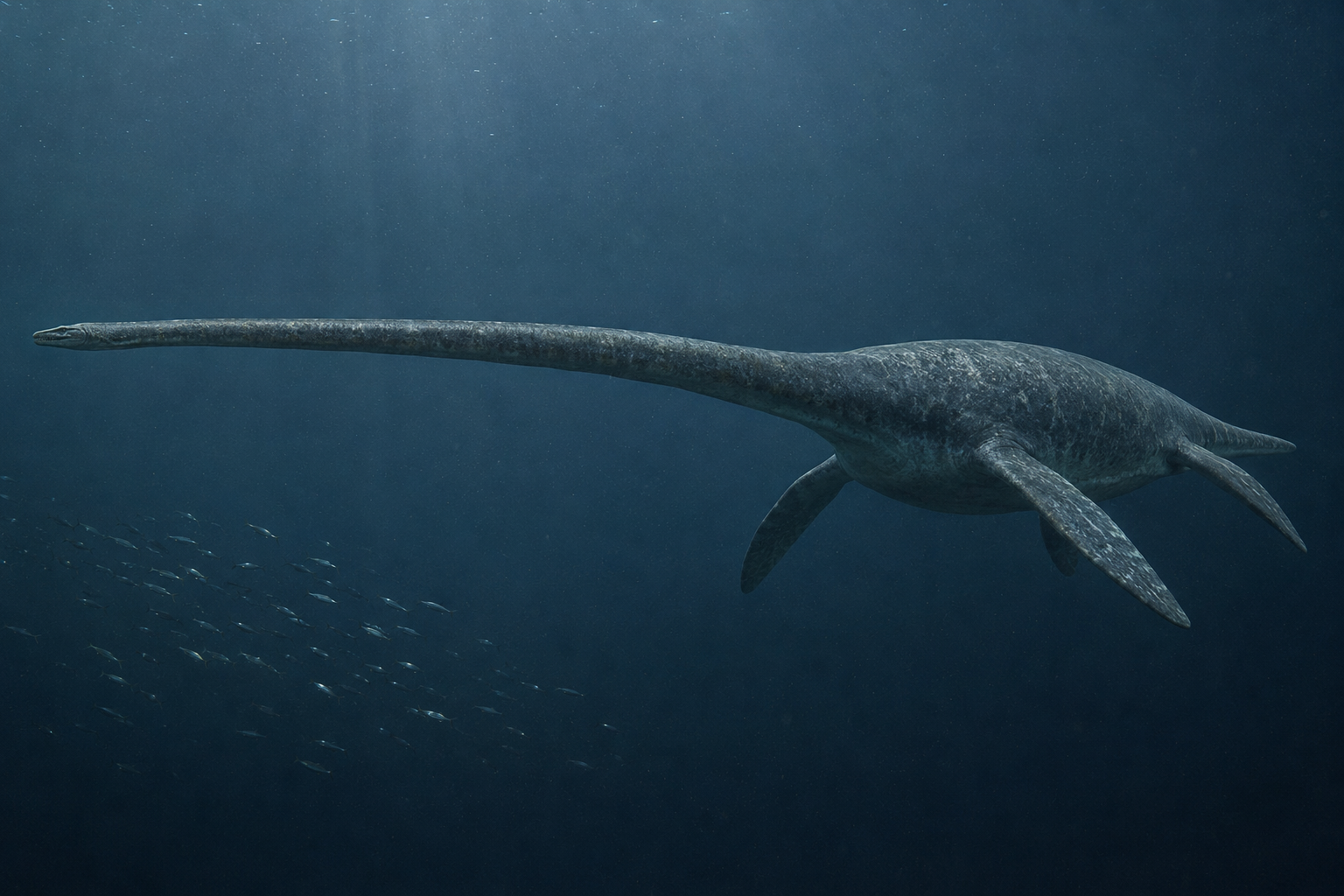
The sea serpentA long-necked plesiosaur with a small head, fish-catching teeth and four flippers. Its neck was flexible, but not capable of the upright swan pose common in old artwork.
- Scale
- Roughly 10–14 m, over half of it neck
- Fossil range
- Western Interior Seaway of North America
07Middle Triassic · about 240–230 Ma
Nothosaurus giganteus
The littoral hunterProbable+
Middle Triassic · about 240–230 Ma
Nothosaurus giganteus
The littoral hunterA semi-aquatic marine reptile with a long body and interlocking teeth. Its limbs were less specialized than those of later plesiosaurs, supporting a life divided between water and shore.
- Scale
- Large species reached several meters
- Fossil range
- Europe and adjacent Triassic seas
Sharks & relatives
05 records08Miocene–Pliocene · about 20–3.6 Ma
Otodus megalodon
MegalodonEstablished+
Miocene–Pliocene · about 20–3.6 Ma
Otodus megalodon
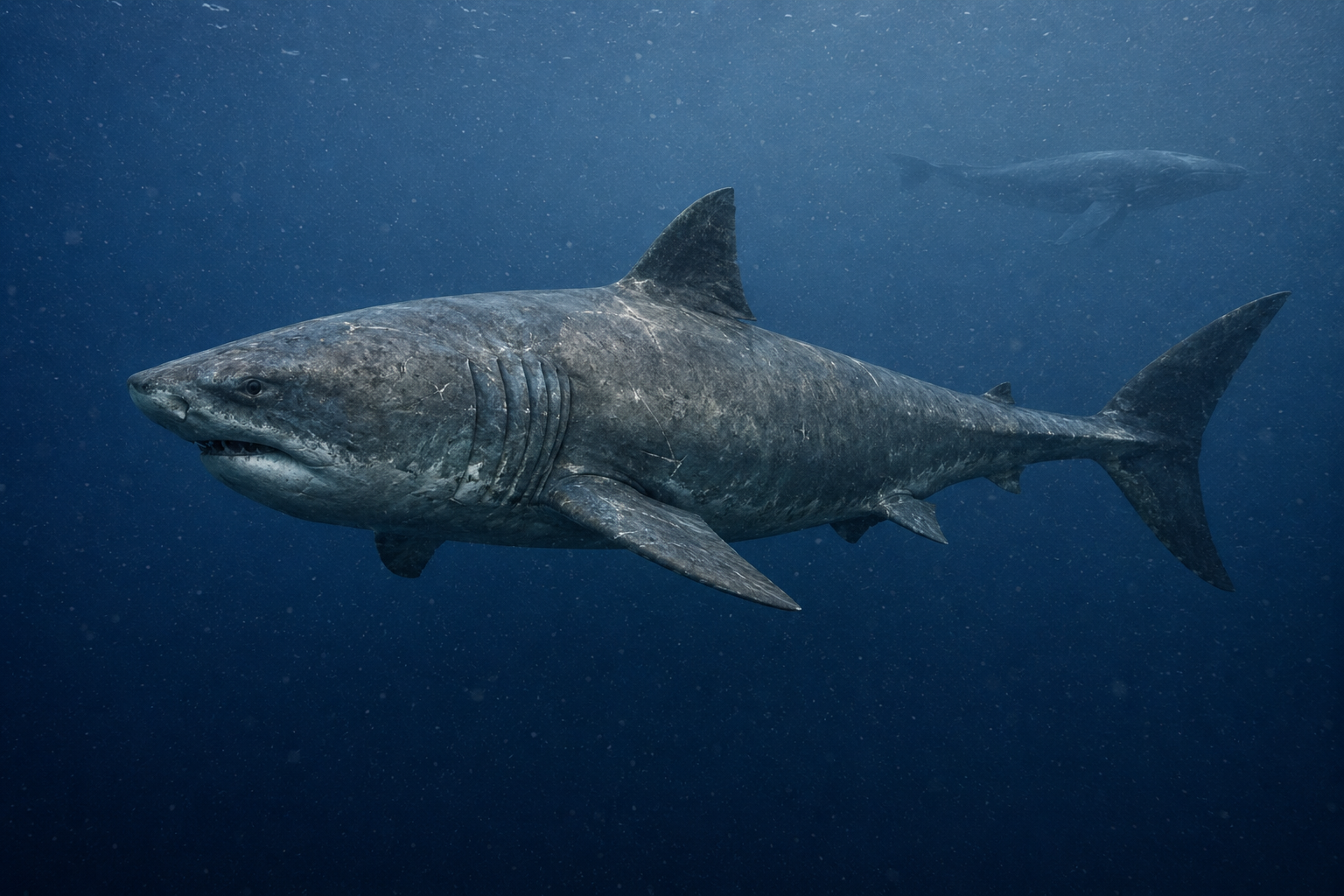
MegalodonAn enormous megatooth shark known from teeth, vertebrae and feeding traces on whale bone. Its exact body shape remains debated because cartilage rarely fossilizes.
- Scale
- Most modern estimates place adults near 15–20 m
- Fossil range
- Warm and temperate seas worldwide
09Permian · about 290–250 Ma
Helicoprion bessonowi
The tooth-whorl hunterEstablished+
Permian · about 290–250 Ma
Helicoprion bessonowi
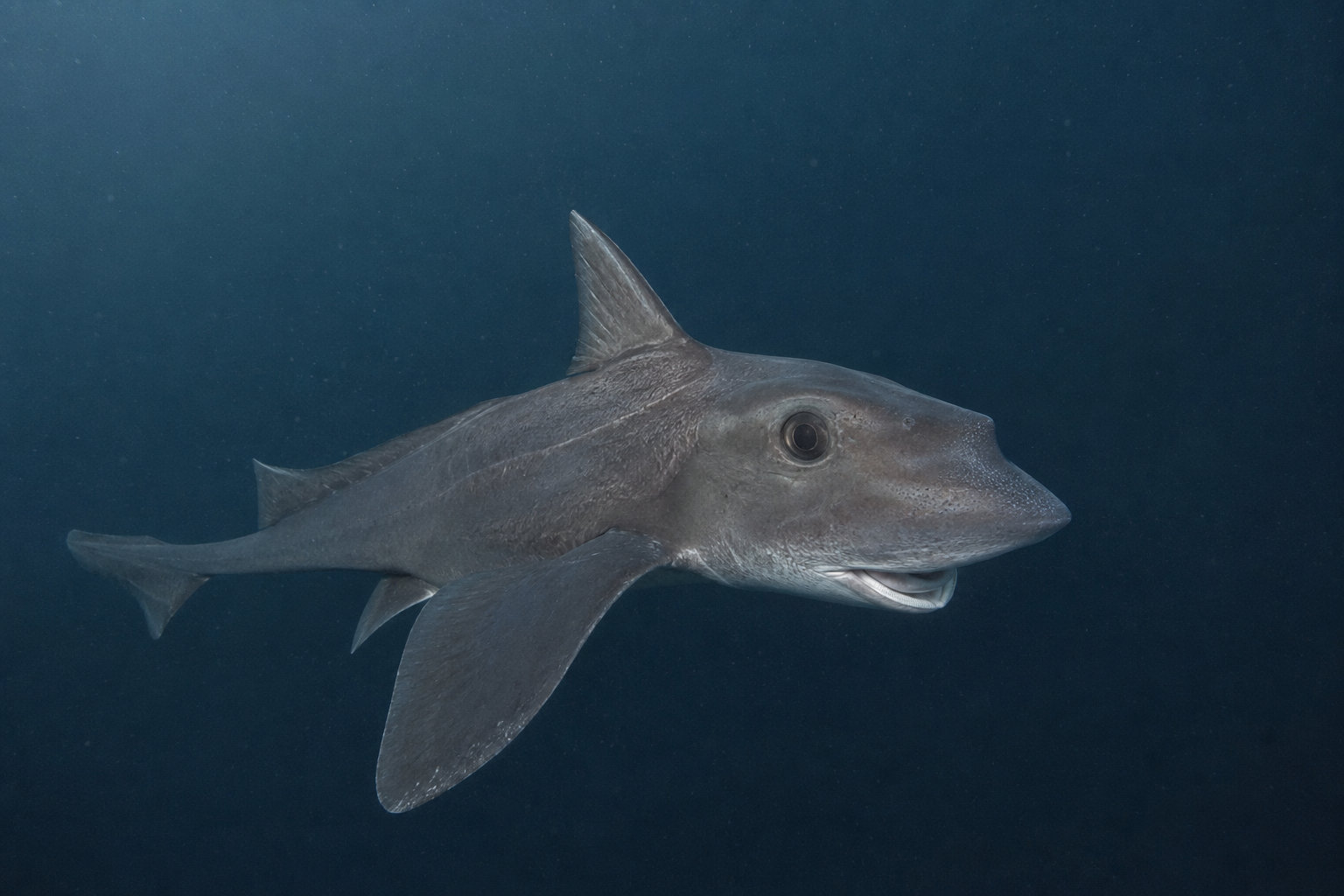
The tooth-whorl hunterA shark-like chondrichthyan more closely related to modern ratfish, famous for a spiral whorl of teeth housed in its lower jaw. CT studies resolved a puzzle that lasted more than a century.
- Scale
- Possibly 5–8 m; estimates remain uncertain
- Fossil range
- Fossils from North America, Eurasia and Australia
10Late Cretaceous · about 100–73 Ma
Cretoxyrhina mantelli
The Ginsu sharkEstablished+
Late Cretaceous · about 100–73 Ma
Cretoxyrhina mantelli
The Ginsu sharkA large lamniform shark known from exceptionally complete fossils and bite traces on marine reptiles. Its streamlined anatomy supports an active, fast-swimming lifestyle.
- Scale
- Approximately 6–7 m
- Fossil range
- Widespread, especially well known from North America
11Carboniferous–Permian
Orthacanthus senckenbergianus
The freshwater sharkEstablished+
Carboniferous–Permian
Orthacanthus senckenbergianus
The freshwater sharkA freshwater xenacanth, an extinct shark lineage, with a long body, double-cusped teeth and a prominent spine behind the skull.
- Scale
- Up to roughly 3 m
- Fossil range
- Freshwater systems of Europe and North America
14Carboniferous · about 310 Ma
Edestus giganteus
The scissor-toothSpeculative+
Carboniferous · about 310 Ma
Edestus giganteus
The scissor-toothA shark-like chondrichthyan with curved tooth blades in the upper and lower jaws. Fossils preserve the teeth far better than the body, and its feeding mechanics remain actively debated.
- Scale
- Large species may have approached 6 m
- Fossil range
- Marine deposits in North America and Eurasia
Prehistoric fish
03 records12Late Devonian · about 382–358 Ma
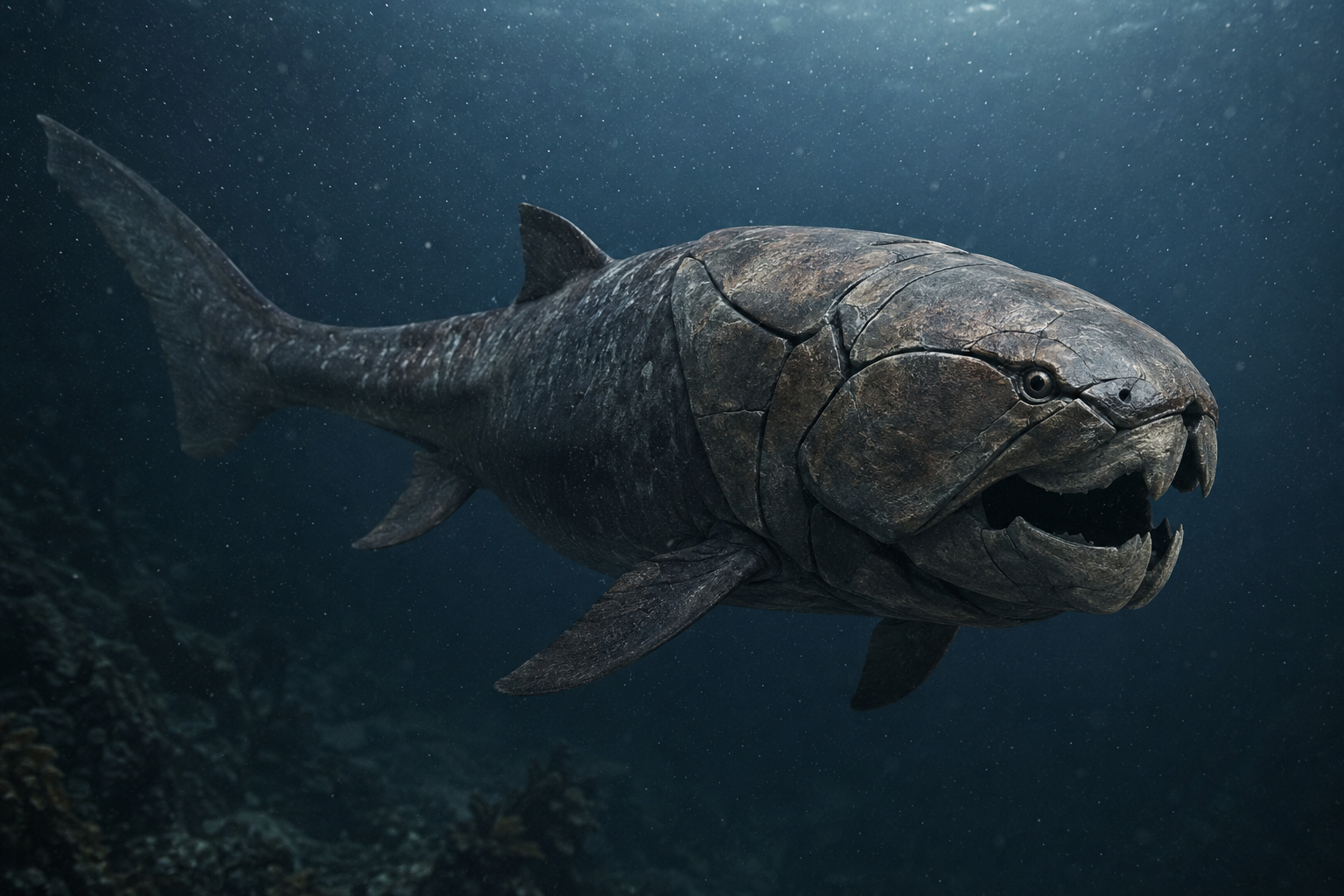
Dunkleosteus terrelli
The armored cutterEstablished+
Late Devonian · about 382–358 Ma
Dunkleosteus terrelli
The armored cutterAn armored placoderm whose sharpened bony jaw plates acted as cutting edges. Recent body-proportion studies favor a shorter, deeper animal than the old 8–9 meter reconstructions.
- Scale
- Likely around 3.5–4.5 m for most large adults
- Fossil range
- North America, Europe and North Africa
13Late Cretaceous · about 100–66 Ma
Xiphactinus audax
The bulldog fishEstablished+
Late Cretaceous · about 100–66 Ma
Xiphactinus audax
The bulldog fishA large predatory bony fish with an upturned jaw and long teeth. The celebrated “fish within a fish” fossil preserves a nearly intact Gillicus swallowed whole.
- Scale
- Usually 4–6 m
- Fossil range
- Cretaceous seas of North America and beyond
15Middle–Late Jurassic · about 165–155 Ma
Leedsichthys problematicus
The gentle giantEstablished+
Middle–Late Jurassic · about 165–155 Ma
Leedsichthys problematicus
The gentle giantThe largest known ray-finned fish was a suspension feeder, using delicate gill structures to strain small organisms from seawater.
- Scale
- Perhaps 9–16 m; estimates are difficult
- Fossil range
- Marine deposits in Europe and South America
Unverified
01 records16Classification withheld
Contact Alpha
Unresolved acoustic targetSpeculative+
Classification withheld
Contact Alpha
Unresolved acoustic targetA recurring sonar return whose movement, scale and depth profile resist comparison with known vessels or catalogued marine life.
- Scale
- Estimate withheld
- Fossil range
- High-latitude deep water
The evidence is real. The conclusion is fiction.
Read the Lore